
The creatine monohydrate versus HCl question usually comes down to one practical goal: you want the form that helps you train hard, recover for the next session, and fits a routine you can actually maintain. Both forms supply creatine, a compound your muscles use during short, high-intensity efforts like heavy sets, sprints, jumps, and hard intervals. But their research depth, dose, price, and digestion experience are not identical.
If you are building muscle, chasing a new strength milestone, or simply want more quality work from your training, creatine can be one of the simplest additions to a consistent nutrition and workout plan. The best choice is rarely the flashiest label. It is the option you will use consistently and confidently.
Creatine Monohydrate Versus HCl at a Glance
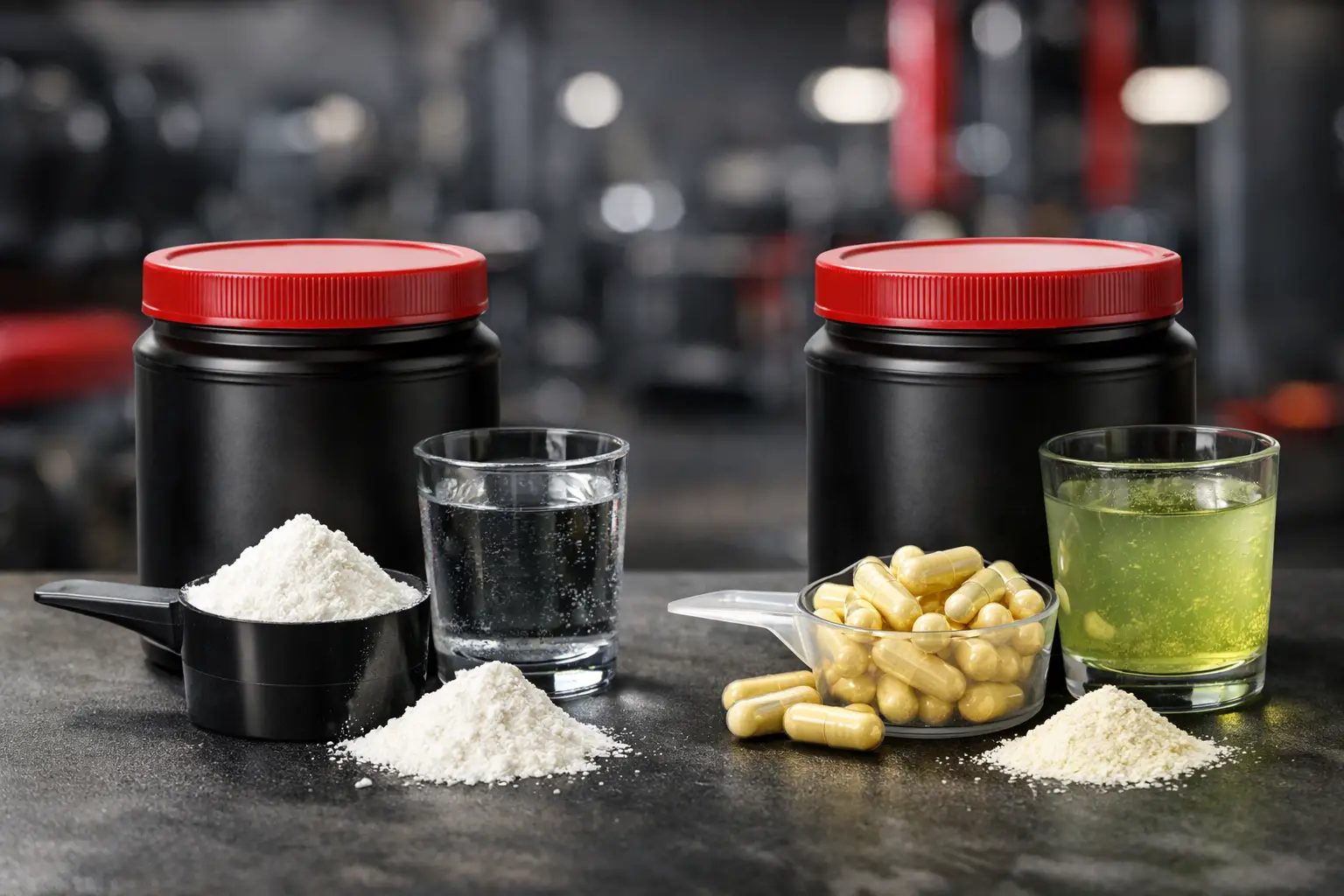
Creatine monohydrate is creatine attached to a water molecule. It has been used in sports nutrition for decades and is the most extensively studied form of creatine. It is typically sold as a plain powder, mixes easily enough in a shaker or glass, and delivers an effective daily serving at a low cost.
Creatine HCl is creatine bound to hydrochloride. It is marketed around higher solubility, meaning it dissolves more readily in water. HCl products often call for smaller serving sizes than monohydrate and may appeal to people who dislike a larger scoop or find standard creatine uncomfortable on their stomach.
That does not automatically make HCl more effective. A smaller scoop can be convenient, but convenience and performance are different questions. Creatine monohydrate has the stronger body of research behind it for improving muscle creatine stores when taken consistently.
Why Creatine Works for Training Goals
Your body makes some creatine, and you also get small amounts from foods such as meat and seafood. Supplemental creatine helps raise the amount stored in muscle tissue. Those stores support the rapid energy system used when you need to produce force quickly.
For gym-goers, that may look like squeezing out another quality rep, holding strength deeper into a workout, or maintaining power across repeated efforts. Over time, those small training advantages can matter because productive training is built from weeks and months of consistent work.
Creatine is not a replacement for food, sleep, progressive training, or a well-built program. It is a tool that can support the work you are already willing to do. That is why it remains popular with beginners and experienced lifters alike.
The Case for Creatine Monohydrate
Monohydrate is the default recommendation for a reason: it works, it is well researched, and it is usually the better value per serving. Most people can take 3 to 5 grams daily and keep things simple. Timing is less important than taking it regularly, so choose a moment you can repeat – with breakfast, in your pre-workout shake, or after training.
You may see a loading phase suggested online. This commonly involves higher daily intake for several days before switching to a maintenance amount. Loading can fill muscle creatine stores faster, but it is optional. Taking a standard daily serving gets you there over time and is easier for many people to stick with.
A common concern is water weight. Creatine can increase water held inside muscle cells, which can cause the scale to move up. That is not the same as gaining body fat. If you are in a body-composition phase, track more than the scale: look at waist measurements, progress photos, strength trends, how your clothes fit, and workout performance.
Monohydrate can leave a little texture at the bottom of a drink, especially if the water is cold. That is a mixing preference, not a sign the product failed. Stir again, use more liquid, or add it to a shake if you prefer a smoother experience.
When Creatine HCl May Make Sense
Creatine HCl may be worth considering if monohydrate repeatedly causes digestive discomfort for you, even after you have tried a smaller serving and taken it with food. Some people simply prefer the way HCl dissolves or like the convenience of a small scoop. If that makes daily use easier, it has real value.
Still, be clear about what you are buying. The claim that HCl requires only a tiny dose because it absorbs dramatically better is not supported by the same level of long-term evidence available for monohydrate. Higher solubility does not necessarily mean a much lower amount produces the same muscle creatine saturation in every person.
Follow the product label for any HCl formula you choose. Avoid assuming that more is better, and do not stack multiple creatine products just because their serving sizes look small. Consistency beats complication.
HCl also tends to cost more per gram. If you are watching your supplement budget, that matters. The money saved with monohydrate can go toward the fundamentals that make every training plan better: quality groceries, protein intake that fits your needs, and a routine you can sustain.
How to Choose the Right Form for You
Start with monohydrate if you are new to creatine, want the most research-backed option, or care most about value. A plain, quality monohydrate powder at 3 to 5 grams per day is a straightforward foundation for most healthy adults who choose to use creatine.
Consider HCl if you have given monohydrate a fair try and the mixing experience, serving size, or stomach comfort has kept you from being consistent. The right product is the one that earns a permanent spot in your routine instead of being pushed to the back of the cabinet after a week.
Your training style can influence the decision, but not as much as marketing may suggest. Powerlifters, bodybuilders, team-sport athletes, runners who include intervals, and recreational gym-goers can all benefit from maintaining creatine stores. Neither form is reserved for elite athletes. The bigger separator is whether you train with intention and use the product consistently.
Get the Dose and Routine Right
With monohydrate, 3 to 5 grams daily is the familiar, practical range. Take it on workout and rest days. You do not need to cycle on and off for it to work as part of an ongoing routine, and you do not need a complicated timing strategy.
If you experience mild stomach upset with monohydrate, try splitting the serving into two smaller portions, mixing it in more fluid, or taking it with a meal. These adjustments can solve the issue without requiring a new form of creatine. If discomfort continues, stopping the product and discussing your individual situation with a qualified health professional is the smart move.
Hydration matters too, particularly for Texans training in hot weather. Carry water, replace fluids after sweaty sessions, and make hydration part of your performance plan rather than an afterthought. Creatine does not excuse poor recovery habits.
People who are pregnant or nursing, have a medical condition, or take medications should ask a qualified healthcare professional before starting a new supplement. The same goes for anyone who has been told to limit certain nutrients or has concerns about adding creatine to their routine.
Do Not Let the Label Distract From the Work
Supplement labels can make a basic decision feel complicated. One tub promises clinical research, another promotes rapid mixing, and a third comes bundled into a larger performance formula. Strip it back to your goal. Are you trying to add productive volume? Build strength? Improve repeated high-effort output? Support a consistent lifting routine while staying on budget?
For most people, creatine monohydrate checks those boxes with fewer trade-offs. HCl is not a bad choice. It is simply a more specialized choice for someone who values its mixability or tolerates it better.
If you want help reading a label or narrowing down a routine, the team at Rock’s Discount Vitamins can offer practical guidance in person at a nearby Texas store. Bring your training goal, your current supplement routine, and any questions about serving sizes. The better your plan fits your real life, the more likely it is to support the progress you are working for.
Pick one form, use it consistently, train with purpose, and give your routine enough time to show what steady effort can do.


