
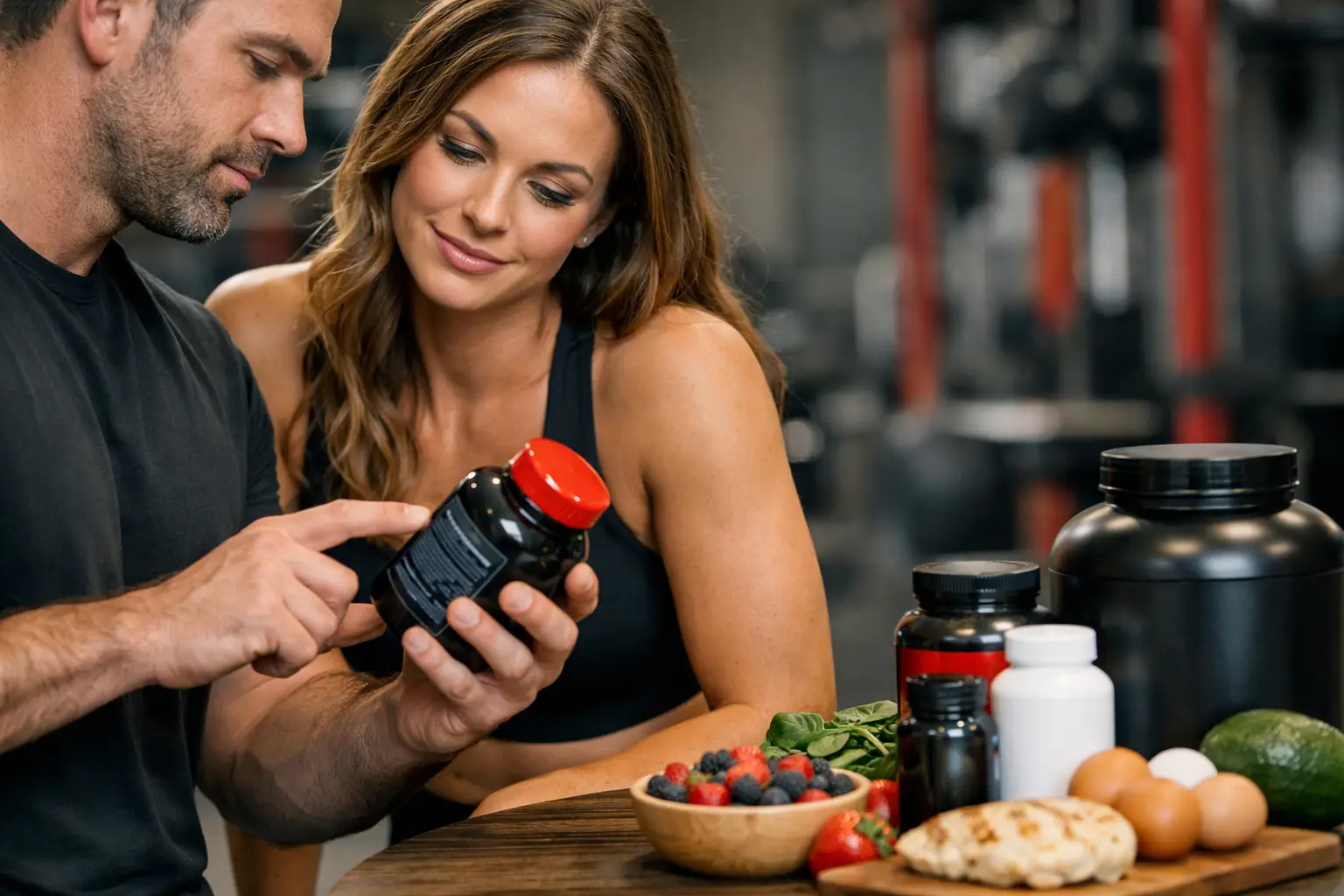
A pre-workout can look powerful on the front of the tub, a protein powder can promise a better shake, and a multivitamin can appear to cover every nutritional base. But the part that tells you what you are actually buying is usually on the back. Learning how to read supplement labels helps you spend with purpose, build a routine that matches your goal, and avoid choosing a product based on flashy packaging alone.
Whether you are training for more muscle, working toward body-composition goals, dialing in recovery, or simply supporting everyday wellness, the label gives you the details that matter. Here is how to use it.
Start With Your Goal, Not the Front Label
The front of a supplement container is designed to get your attention. Words such as “energy,” “lean,” “strength,” “recovery,” or “immune support” can be useful clues about a product category, but they are not the full story. Turn the bottle or tub around before deciding whether it fits your routine.
A good first question is simple: What do I want this product to help me do? A person looking for an easy way to increase daily protein intake needs different label details than someone shopping for hydration support during long training sessions. Someone choosing a basic vitamin may care most about serving size, nutrient forms, and potential overlap with other products.
Clear goals keep your cart from filling with products that sound good but do not serve a real purpose. Supplements can complement consistent meals, training, hydration, sleep, and recovery habits. They are not a shortcut around those foundations.
How to Read Supplement Labels From Top to Bottom
Most products have a Supplement Facts panel, followed by an ingredient list and directions for use. Read them in that order. It gives you a quick, practical picture of what is inside and how the manufacturer expects you to take it.
Check the serving size first
Serving size is the detail many shoppers skip, and it can change the meaning of everything below it. A label may list 25 grams of protein, 200 milligrams of caffeine, or 5 grams of creatine per serving. But is one serving one scoop, two scoops, four capsules, or a packet?
Then look at servings per container. A tub that appears less expensive may require two scoops per day, while another may provide the same type of formula with a more convenient serving. There is no automatic winner, but comparing the actual daily serving helps you compare value honestly.
Also pay attention to the directions. Some products are intended for training days only, while others are commonly used as part of a daily routine. More is not automatically better. Follow the label rather than assuming an extra scoop will produce extra progress.
Read the amount per serving, not just the ingredient name
Seeing an ingredient on a label tells you very little by itself. The amount per serving is where the conversation gets useful. If you are comparing two protein powders, look at protein per serving along with calories, carbohydrates, fats, and the number of scoops required. If you are comparing electrolyte products, look at the specific minerals and quantities instead of relying on words like “hydration.”
The right amount depends on the ingredient, your total routine, your body size, dietary intake, training demands, and personal tolerance. It also depends on what else you use. A multivitamin, greens product, and individual micronutrient supplement may overlap in ways that are easy to miss if you only read the front labels.
For performance products, compare like with like. Do not compare one scoop of a stimulant-free pump formula with one scoop of a high-stimulant pre-workout and assume they are meant to do the same job. Their formulas and intended uses can be very different.
Use % Daily Value the right way
The % Daily Value, or %DV, is most common on vitamins, minerals, and other nutrients. It shows how much one serving contributes to a general daily reference amount. It can be a helpful starting point, especially when you are comparing multivitamins or everyday wellness products.
Still, %DV is not a personal prescription. Your individual needs may differ based on your diet, lifestyle, and guidance from a qualified healthcare professional. A high percentage is not automatically superior, and a low percentage is not automatically useless. The point is to understand what you are adding to your day and whether it overlaps with other products.
Look beyond the headline ingredients
The ingredient list below the facts panel is where you will find other components used for flavor, color, texture, capsules, or mixing. For many shoppers, this is where preferences matter most.
If you avoid certain sweeteners, prefer a simpler formula, have dietary restrictions, or know that a particular ingredient does not agree with you, take a minute to review this section. Protein powders may differ in milk-based ingredients, plant sources, gums, flavor systems, and added carbohydrates. Capsules may use different capsule materials. None of these choices is universally right or wrong. They simply need to fit your preferences and routine.
Allergen statements deserve the same attention. Check them every time, even if you have purchased a similar product before. Formulas can change.
Watch for Blends That Hide the Details
A proprietary blend lists several ingredients under one combined total rather than disclosing the amount of each ingredient. For example, a blend may show 3,000 milligrams total and then name several ingredients underneath it. You know the combined weight, but not how much of each ingredient you are getting.
That does not automatically make a product poor quality. Some brands use blends for formula design or proprietary reasons. But it does make precise comparison harder. If knowing the exact dose of each ingredient matters to you, a fully disclosed label gives you more information.
This is especially useful for experienced gym-goers who are trying to avoid doubling up across products. If you use a pre-workout, an energy drink, and a fat-management formula on the same day, labels with clear amounts make it easier to track total stimulant intake. Be especially mindful of caffeine from all sources, including coffee and other beverages.
Compare Products by the Cost Per Useful Serving
Price matters, but the sticker price is only one part of the decision. Compare the cost per serving after confirming that the serving sizes and formulas are similar. A larger container is not always a better value if it delivers fewer servings or requires a larger daily dose.
For a protein powder, useful comparison points include protein per serving, total servings, calories, carbohydrate and fat content, and how well it fits your meals. For a pre-workout, compare the disclosed formula, caffeine amount if included, and whether the product aligns with your training time and stimulant tolerance. For a multivitamin, compare nutrient amounts, serving size, and how it fits with what you already take.
The best choice is not necessarily the formula with the longest label. It is the one that gives you a clear, appropriate fit for your goal and that you can use consistently.
Read Warnings and Directions Like They Matter
Warnings are not filler. They may identify age restrictions, stimulant content, allergens, conditions for storage, or situations where you should speak with a healthcare professional before use. If you are pregnant or nursing, take medication, have a health condition, or are planning a procedure, get individualized advice from a qualified healthcare professional or pharmacist before adding a supplement.
Pay attention to timing, too. A formula with caffeine may not fit an evening workout if it affects your sleep. A powder intended to be mixed with plenty of water may not work as designed if you use only a few ounces. A product with a suggested cycle or maximum daily use should be used according to its label.
Know What a Quality Label Looks Like
A trustworthy label is readable. It clearly identifies the serving size, ingredient amounts, directions, warnings, manufacturer information, and other required product details. You should not have to guess what you are taking.
Look for a current seal and packaging that is intact when you buy. If a product has a safety seal, check that it has not been broken. If you are unsure how a formula fits your current stack, bring the label into a Rock’s Discount Vitamins location and ask for help comparing it with the products you already use. A quick conversation can prevent unnecessary overlap and make your next purchase more intentional.
Your supplement label is more than fine print. It is your game plan for choosing with confidence. Read it before you buy, use the product as directed, and let your actual goals – not the loudest claim on the container – lead the way.