

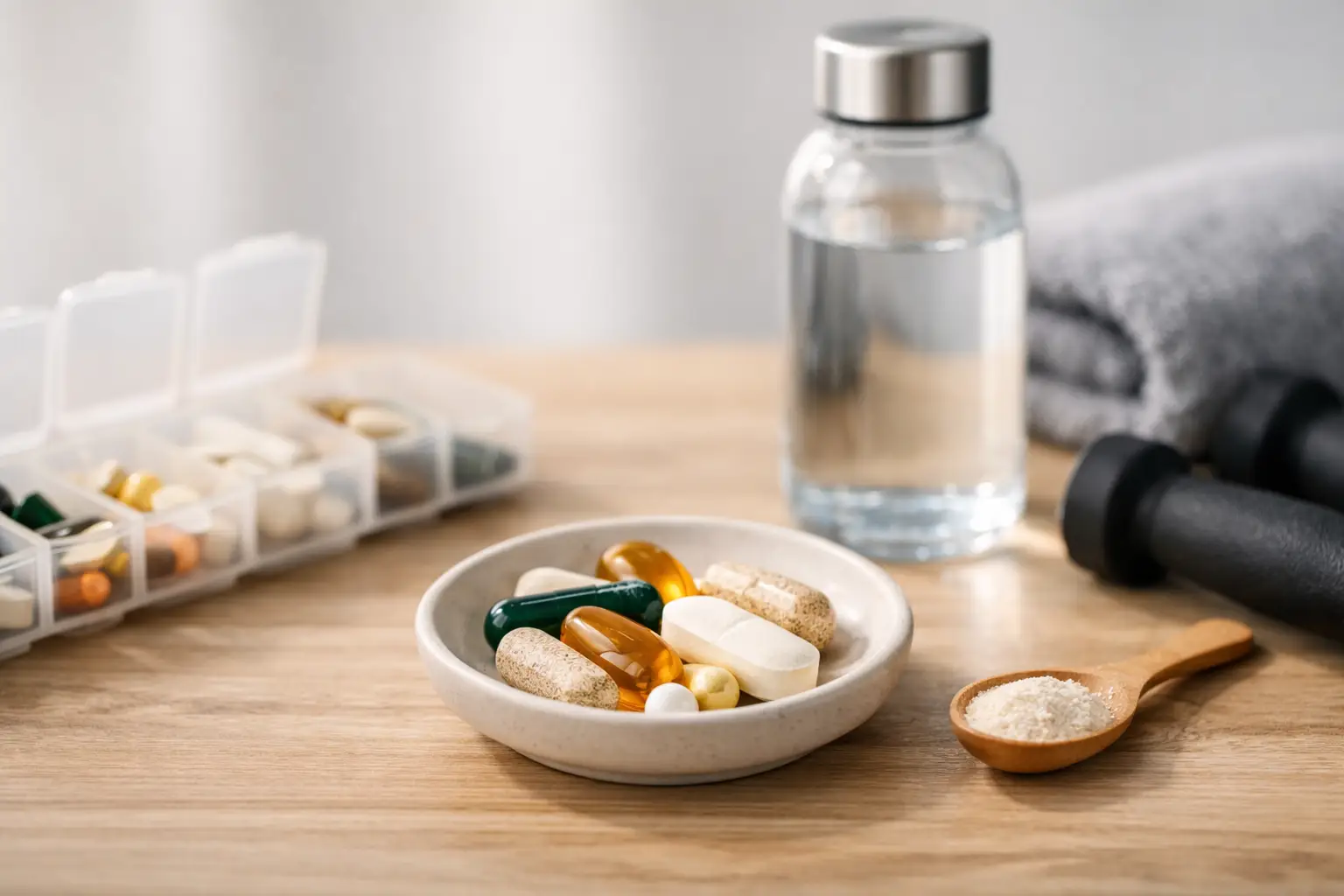
The supplement shelf gets crowded fast when your goal is simple: build muscle, lose body fat, recover better, or feel healthier day to day. The best answer to how to build a supplement routine is not to buy everything that sounds promising. It is to choose a small number of products that support your actual goal, fit your lifestyle, and earn their place through consistent use.
A routine should make your nutrition and training easier to execute, not turn your kitchen counter into a chemistry lab. Start with what you can measure, keep your plan simple for a few weeks, and adjust based on results.
Start With One Clear Outcome
“Get healthier” is a good intention, but it is too broad to guide supplement choices. Give your routine a job. Maybe you want to hit your daily protein target, add strength, get through hard training sessions with better energy, improve recovery, manage appetite while dieting, or cover basic nutrient gaps.
One primary goal keeps you from stacking products that pull in different directions. Someone focused on gaining muscle may benefit most from protein powder, creatine, and a reliable meal plan. Someone training for a 5K may care more about hydration, carbohydrate intake, and recovery. A person who is not training regularly may get more value from foundational nutrition than a high-stimulant pre-workout.
Put your goal in a sentence that includes a number or behavior. For example: “I want to gain five pounds over the next 12 weeks while hitting 150 grams of protein daily,” or “I want to train four days per week without afternoon energy crashes.” That gives you a way to judge whether the routine is helping.
Build a Supplement Routine on a Strong Foundation
Supplements are meant to supplement. They cannot consistently outwork low protein intake, poor sleep, dehydration, or a training plan that changes every week.
Before adding products, look at the basics. Are you eating enough total food for your goal? Are you getting protein at most meals? Do you drink enough water, especially in the Texas heat? Are you sleeping close to seven to nine hours most nights? Are you following a program long enough to see progress?
You do not need perfect habits before using supplements. Real life includes busy workdays, early gym sessions, travel, and meals on the go. But knowing where the gaps are tells you what a product needs to do. A protein shake is useful when it helps you meet protein needs. It is less useful when it is added on top of an already complete intake just because the label looks good.
Choose Your Core Products First
Most people do well by starting with one or two products that match a clear need. Give those products time before adding more.
Protein for Muscle, Recovery, and Convenient Meals
Protein powder is one of the most practical options for lifters, athletes, and busy adults. It can help close the gap between the protein you eat and the protein your body goals require. Whey protein is a popular fast-digesting choice, while casein may fit better when you want a slower-digesting option. Plant-based powders can be a good fit for those avoiding dairy.
The best protein powder is not automatically the one with the biggest tub or most aggressive flavor name. Look at protein per serving, total calories, ingredients you tolerate well, and whether you will actually use it consistently. If fat loss is the goal, account for the calories in shakes. If gaining is the goal, blending protein with fruit, oats, or nut butter can make it a more substantial meal.
Creatine for Strength and Performance
Creatine monohydrate is a well-established option for people who lift, sprint, play sports, or want support for high-intensity performance. A typical daily routine is 3 to 5 grams, taken consistently. Timing matters far less than making it a habit.
Some people gain a little scale weight after starting creatine because it can increase water held inside muscle cells. That is not the same as gaining body fat. If you track body composition, strength, gym performance, and waist measurements instead of only scale weight, you will get a clearer picture.
A Daily Vitamin Only When It Fills a Gap
A multivitamin can be a useful backstop when your diet is inconsistent, you are cutting calories, or you have limited food variety. It should not be treated as a replacement for fruits, vegetables, quality proteins, and healthy fats. More is not always better with vitamins and minerals, especially when multiple products contain overlapping ingredients.
Vitamin D, omega-3s, magnesium, or other targeted nutrients may make sense for some people, but the right choice depends on diet, lifestyle, lab work, and individual health needs. This is where a conversation with a qualified health professional can be worth more than guessing.
Add Performance Products With a Purpose
Pre-workout can be a great tool when you train early, have a demanding session ahead, or need a reliable boost in focus. It can also be a poor fit if stimulants make you anxious, disrupt sleep, or lead you to chase stronger and stronger formulas.
Check the caffeine amount per scoop, then count caffeine from coffee, energy drinks, and other products. If your sleep is off, your training performance and recovery can suffer no matter how strong the pre-workout feels. Start with a lower serving to assess tolerance, and avoid taking stimulant-heavy products late in the day.
Intra-workout products, amino acids, pump formulas, and specialty recovery blends can fit certain routines, especially for high-volume training or long sessions. They are usually not the first purchase for a beginner with limited budget. Get protein intake, hydration, calories, and sleep handled first. Then decide if a specialty product solves a real problem.
Use Timing to Create Consistency
Supplement timing does not need to be complicated. The most effective schedule is often the one tied to an existing habit.
Take a daily vitamin with a meal if that is easier on your stomach. Take creatine with breakfast, a shake, or any meal you rarely miss. Use protein after training if it is convenient, but do not stress if your shake happens later. Total daily protein matters more than racing to finish a shake the minute you rack the last weight.
For pre-workout, follow the label and allow enough time to assess how it affects you. For hydration products, use them strategically around long workouts, heavy sweating, outdoor work, or endurance activity. You do not need an electrolyte drink for every light 30-minute gym session, but it can be valuable when fluid and sodium losses are high.
Introduce One Change at a Time
Adding five new supplements on Monday makes it hard to know what is working by Friday. It also makes it harder to spot digestive issues, sleep changes, jitters, or ingredients you do not tolerate well.
Start with one product, use it as directed for two to four weeks, and track a few relevant signals. For a protein powder, track whether you hit your daily protein target. For creatine, watch strength, reps, and training volume over time. For pre-workout, track energy, focus, sleep quality, and whether you need more caffeine just to feel normal.
Keep the tracking simple. A note on your phone can record body weight averages, waist measurements, workouts completed, sleep, and how you feel. The goal is not to obsess over every number. It is to make decisions based on patterns instead of hype.
Read Labels Like Your Results Depend on Them
A flashy front label tells you what a product wants to be known for. The Supplement Facts panel tells you what you are actually taking. Check serving size, active ingredient amounts, caffeine content, allergens, calories, and whether you are doubling up on ingredients from other products.
Be cautious with proprietary blends that do not show individual ingredient amounts. Also be careful with products promising extreme fat loss, instant muscle gain, or dramatic results without changes to food and training. Strong marketing is not a substitute for a sound routine.
If you are pregnant or nursing, have a medical condition, take prescription medications, or have concerns about blood pressure, blood sugar, kidneys, liver health, or stimulant sensitivity, talk with your doctor or pharmacist before starting supplements. That is especially true for complex formulas and products containing multiple active ingredients.
Make Your Routine Affordable Enough to Keep
The best routine is one you can follow month after month. Set a budget before shopping and prioritize products that address your biggest gap. For many people, that means food first, then protein powder or creatine if they fit the goal, followed by anything more specialized.
At Rock’s Discount Vitamins, Texans can get help comparing established brands and building a routine around a real outcome instead of walking out with a random stack. Whether you shop in store or online, ask practical questions: What does this product do? How should I use it? What should I expect? Is it necessary for my current goal?
Your routine does not have to look impressive on a shelf. It needs to help you show up for the next workout, recover for the one after that, and keep moving toward the body and health goals you set for yourself.




